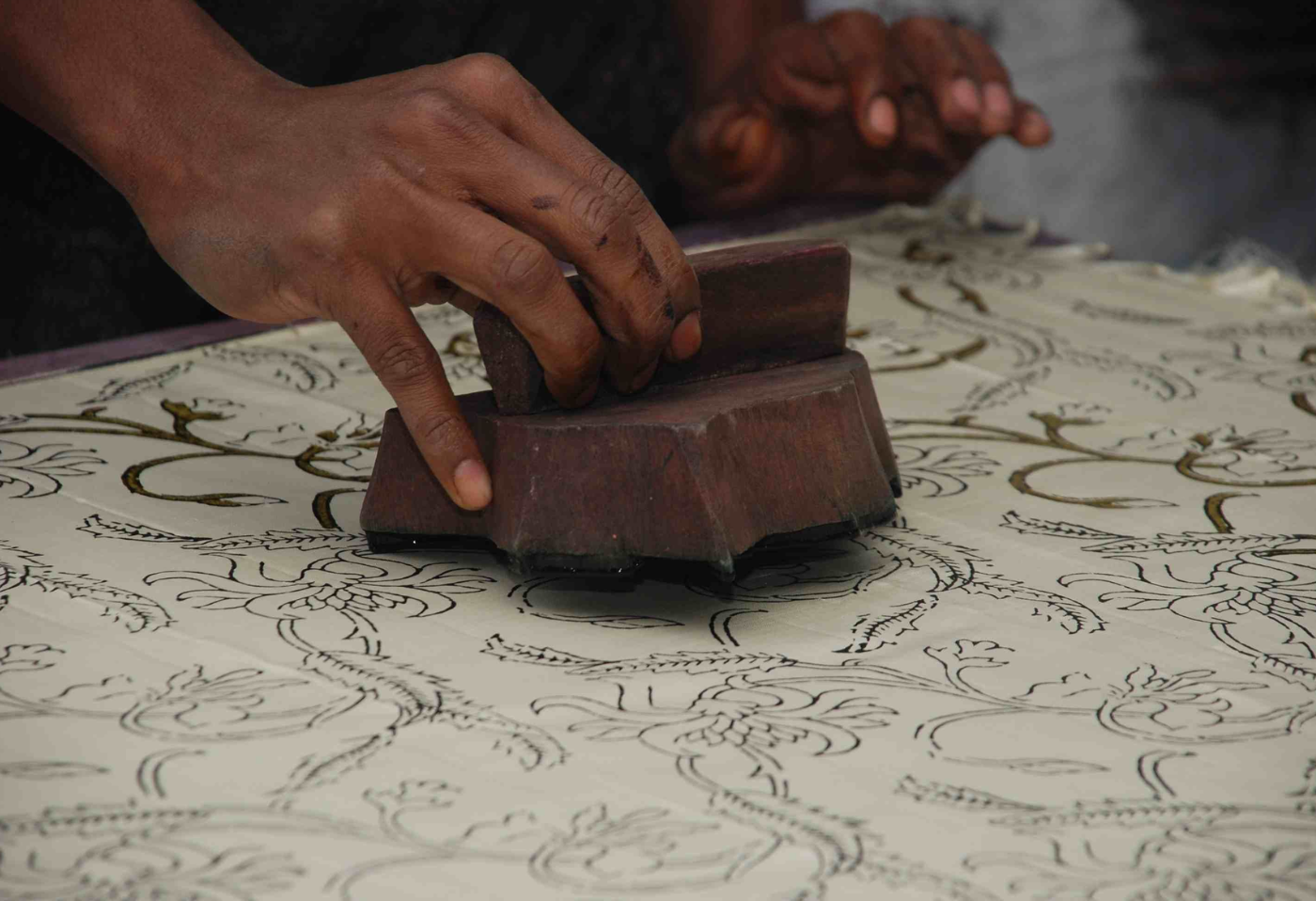
Hand Block Printing
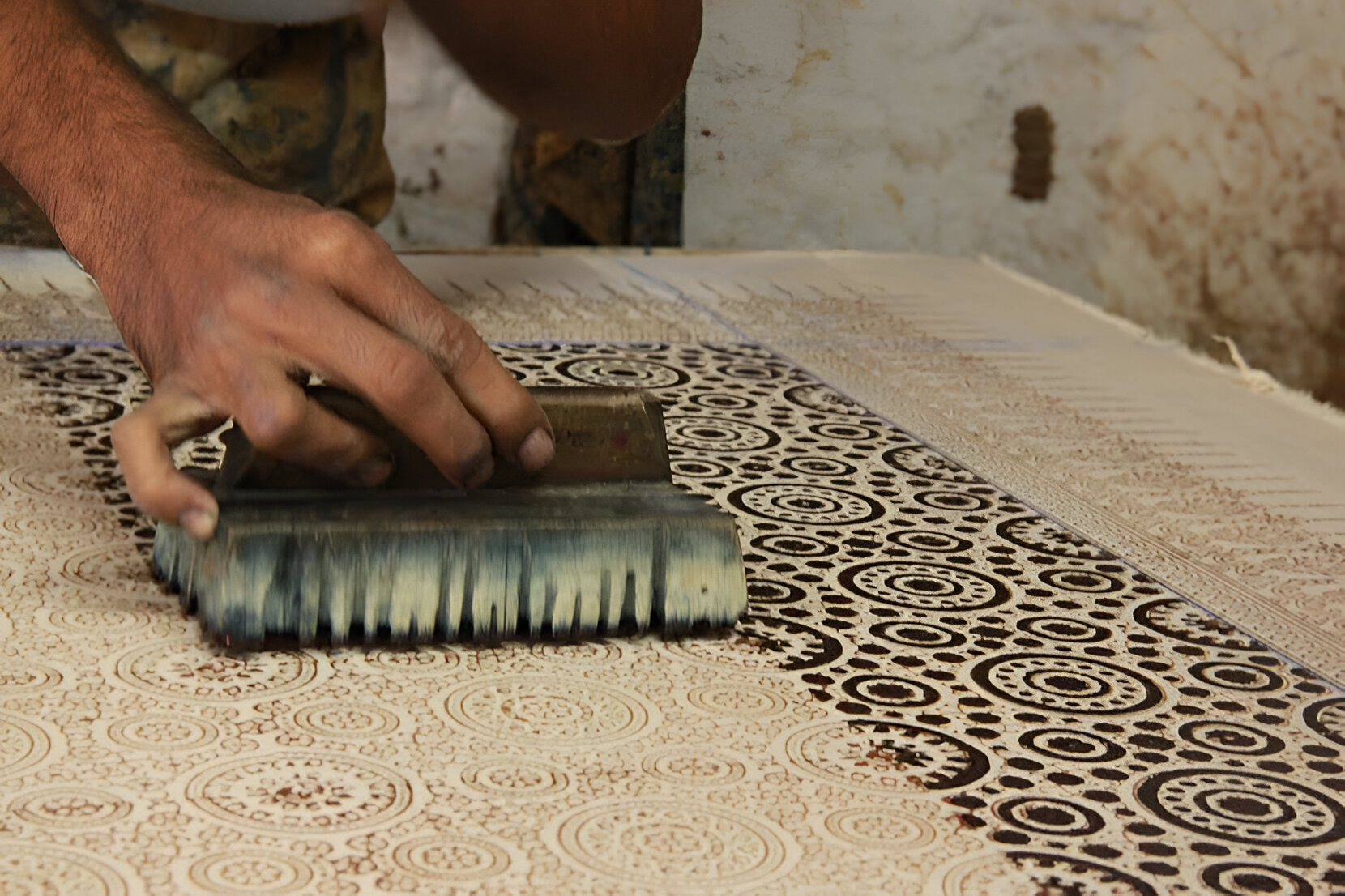
History
The traditional process of hand block printing on textiles, with rich natural colors, has been practiced in Rajasthan for around 500 years. Block printing was introduced to the Jaipur region of Rajasthan by the Chhipa community. This community was originally located in Bagru Village, an area now famous for its vegetable dye and mud resist (dabu) block prints. The art of block printing has been passed down for generations within families and communities and has branched out in recent decades to other regions such as Sanganer, near Jaipur. In traditional Bagru style block printing, the ‘recipes’ for the traditional plant-based dyes are developed within each family and kept alive from generation to generation. The colors are dependent on the quality of the plants, the water, skill, and knowledge of the printing masters. In more recent forms of block printing, such as those practiced in Sanganer, colors are mixed using AZO free pigment color with a binder.
Process
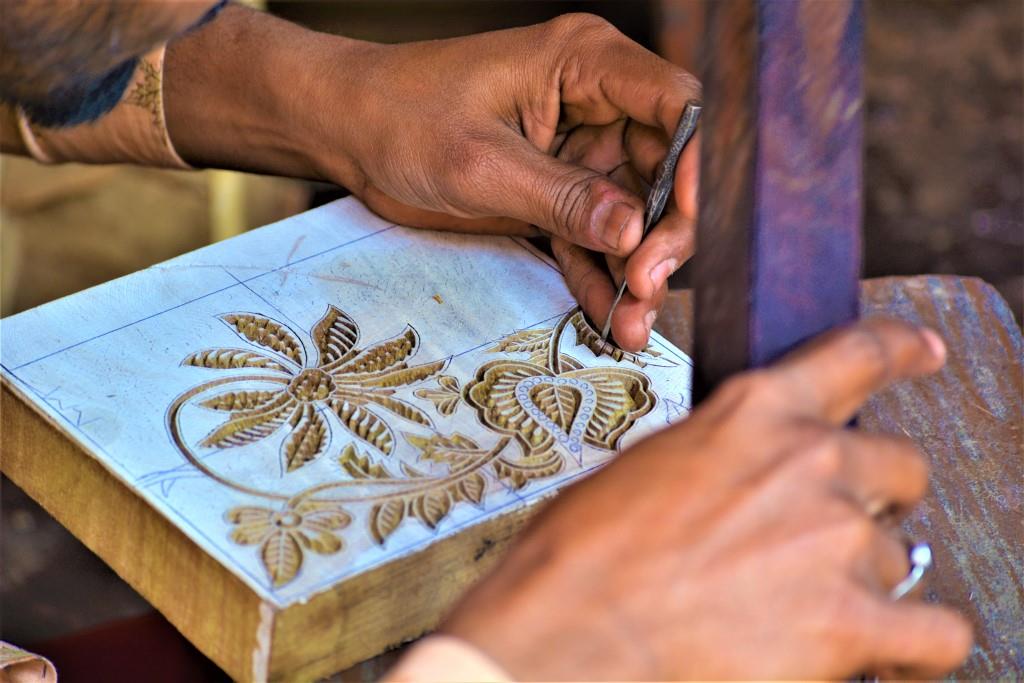
Block Carving
A print starts with the design, drawn on paper and carved into the Sheesham wood block. Designs are meticulously carved by hand into the blocks which are approximately 18-25 cm across. The physical blocks, one for each color in the print design, are used to stamp a single repeat which is then stamped in rows across the fabric, forming a seamless repeat. Each color in the design is carved into a separate block. Block carving is in itself an art requiring years of apprenticeship to gain mastery and is done entirely by hand. When printing, the ground color block, known as the 'gud,' is stamped first. This is followed by the outline block or 'rekh,' which is the most intricate and is typically the outline for a floral or lattice-type design. Next comes the fill block or 'datta.' This is the block that fills in the design with color. Finally, the background block or 'chhapa' is stamped to fill in the background of the design. The process is repeated until the entire fabric is covered with the design.
Color Mixing-Preparing the Dyes
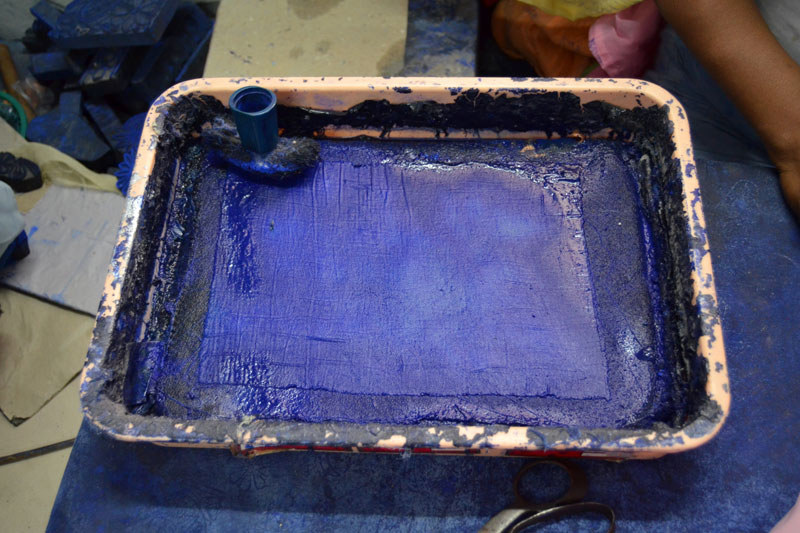
Once the blocks are carved, the master printer prepares the colors which will be used in printing.
The colors are then poured into wooden trays which use a handmade mesh as a spongy surface to help
spread the color evenly across the bottom of the block. The printer stamps the block in the color
tray each time, then stamps the block onto the fabric to form the repeat pattern. The colors shown
are AZO free, eco-friendly synthetic colors that are used in Sanganer printing.
For each new design, we do a color check and test out new color combinations.
We use Pantone TPG/TPX reference codes for color matching.
Printing Process
Each color pattern is stamped individually onto the fabric; the process takes skill and time, as the pattern must
be stamped repeatedly across the fabric, color by color. The slight human irregularities — inevitable in handwork
— create the artistic effect emblematic of block prints. The final outcome of this intricate labor is a timeless
beauty, and every garment made from this fabric is unique.
The printing master must carefully align each block as he prints, using the ‘guide’ carved on the left edge of the
block as his marker. Each printer has a slightly different style which is considered his ‘signature’ look. The
printing master must then follow the same pattern of aligning the blocks with each color layered onto the design.
The subtle gaps and overlaps are a beautiful reminder of the handwork and give block printing its iconic look. All
prints exemplify this aesthetic and have a subtle pattern of light/dark across the design.
Block printing villages are known for their rhythmic ‘tock-tock’ sound of the block printer hitting the wood block
to ‘stamp’ the pattern. It is an enchanting sound that echoes through the village and is a reminder of the
significance of artisan work.